
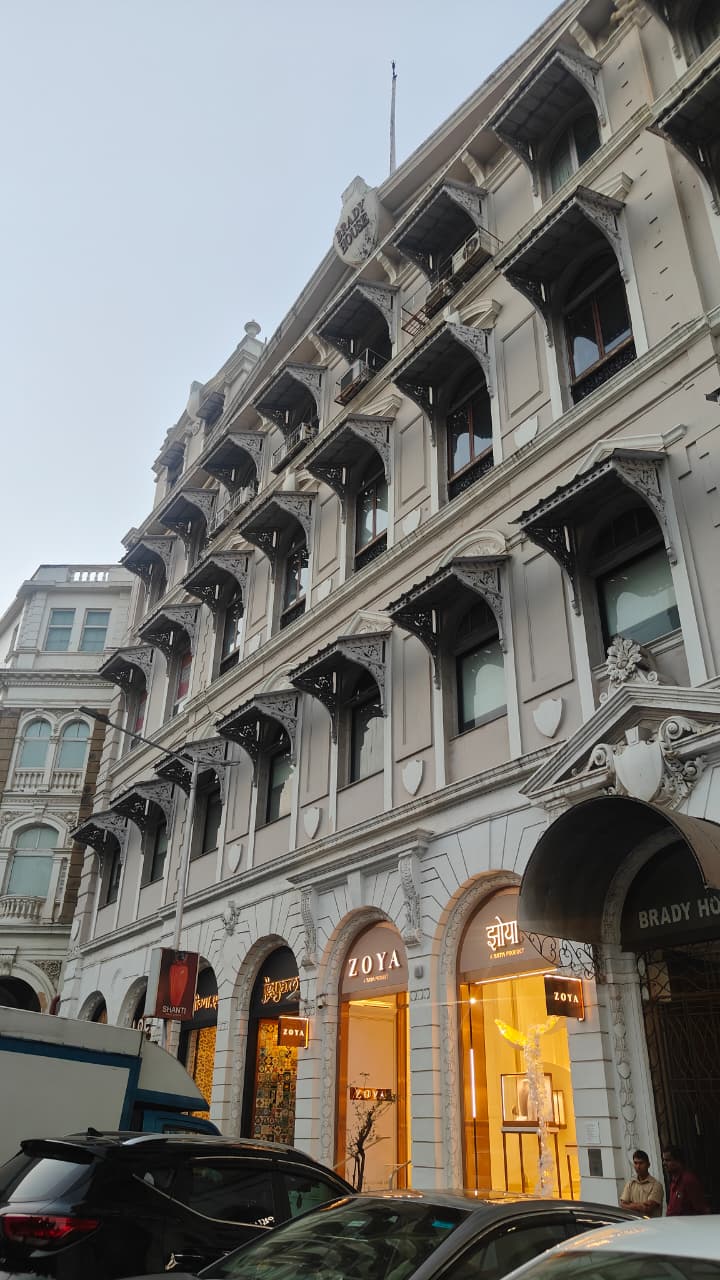
Fort Mumbai looks familiar before you even arrive. You've seen its buildings in Bollywood films. You've scrolled past its colonial architecture on Instagram. CST, Gateway of India, Horniman Circle, the names appear on every "things to do in South Mumbai" list.
But here's the thing about Fort: the most interesting parts don't photograph well. They're not landmarks. They're details, a plaque most people walk past, a building everyone photographs but rarely enters, a garden with a history no signboard mentions.
If you're planning a heritage walk in Mumbai, these five facts will change how you see the Fort area. Not because they're obscure, but because they're hiding in plain sight.
1. Mumbai's "Zero Point" Is a Church You've Probably Ignored
Every city has a centre. In London, it's Charing Cross. In Mumbai, it's St. Thomas Cathedral, a quiet church tucked behind Horniman Circle that most visitors walk past without a second glance.
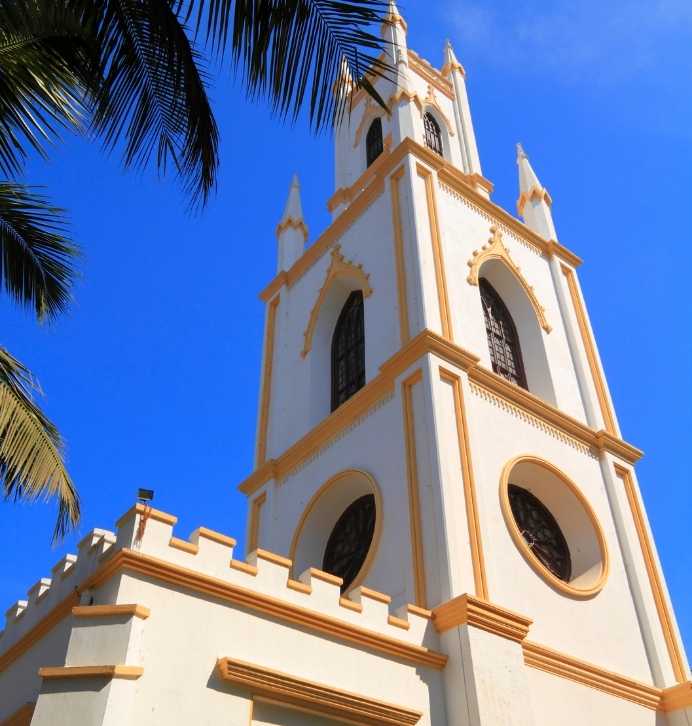
St. Thomas Cathedral, Mumbai's forgotten Zero Point
Built in 1718, St. Thomas was the first Anglican church constructed within the fortified British settlement of Bombay. But its significance goes beyond religion. For over two centuries, this church served as Mumbai's official "Zero Point", the exact spot from which all distances in the city were measured.
The British installed 16 milestone markers radiating outward from this church in 1817. Eleven of these original markers survived, and the Brihanmumbai Municipal Corporation restored all 16 in 2022. They still exist today, scattered across Mumbai, silent witnesses to a time when St. Thomas Cathedral was literally the centre of everything.
And the name "Churchgate"? It's not just a railway station. The original Bombay Fort had three gates, and one of them, the Church Gate, led directly to this cathedral. The gate was demolished in 1860, but the name stuck.
Most visitors to Fort Mumbai never step inside St. Thomas. They photograph CST, admire the Gothic architecture, and move on. Meanwhile, the actual heart of the city sits quietly, waiting.
2. A Dictator Once Offered £1 Million for Something Inside Town Hall
The Asiatic Society's Town Hall is one of the most photographed buildings in Fort Mumbai. Its grand staircase has appeared in countless Bollywood films and pre-wedding photoshoots. But almost no one climbs those stairs to see what's inside.
They should.
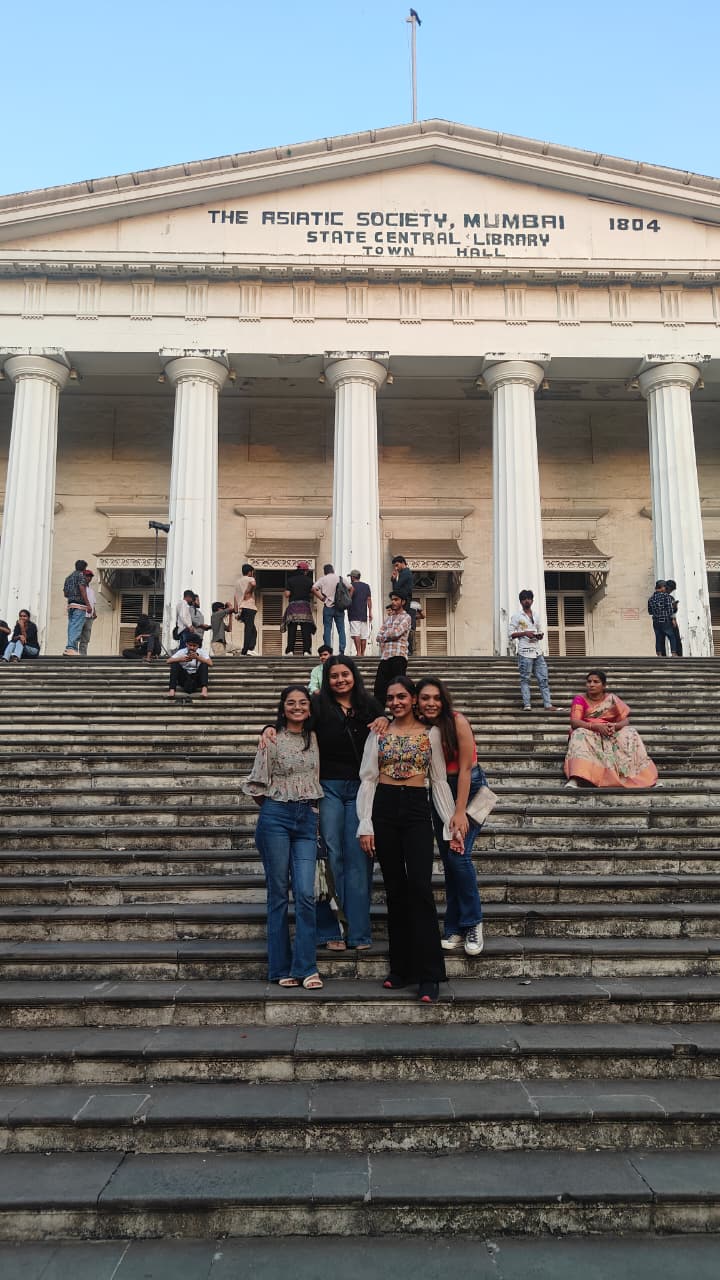
The stairs everyone photographs, but few climb
The Asiatic Society, founded in 1804, holds one of only two original 14th-century manuscripts of Dante's Divine Comedy in the world. The other is in Italy. This one, wrapped in red silk and kept in a basement vault, was donated by Mountstuart Elphinstone, Governor of Bombay from 1819 to 1827.
In 1930, Benito Mussolini declared this manuscript an Italian national treasure and offered £1 million to bring it "home." The Society refused. The manuscript stayed in Mumbai, where it remains today, arguably the city's greatest hidden treasure.
But the Dante manuscript is just the beginning. The Society's collection includes over 100,000 books (15,000 classified as rare), more than 3,000 ancient manuscripts in Persian, Sanskrit, and Prakrit, a rare gold mohur coin belonging to Emperor Akbar, coins issued by Shivaji Maharaj, and fragments believed to be from Buddha's begging bowl, excavated at the ancient port town of Sopara.
The building itself witnessed history being made. In 1858, Lord Elphinstone stood in this hall and read Queen Victoria's Proclamation abolishing the East India Company, ending 258 years of Company rule in India.
Annual membership costs Rs. 3,000. The building is open Monday to Saturday. The stairs everyone photographs? They lead to all of this.
3. Horniman Circle Was Once a Pit Where Fortunes Were Made and Lost
Today, Horniman Circle is Fort Mumbai's most peaceful spot, a manicured garden surrounded by heritage buildings, perfect for lunch breaks and evening strolls. Its name honours Benjamin Horniman, an Irish journalist who broke the story of the Jallianwala Bagh massacre in 1919.
But before it was a garden, before it was even called Horniman Circle, this space had a different name and a very different purpose.
It was called Bombay Green. And it was a trading pit.
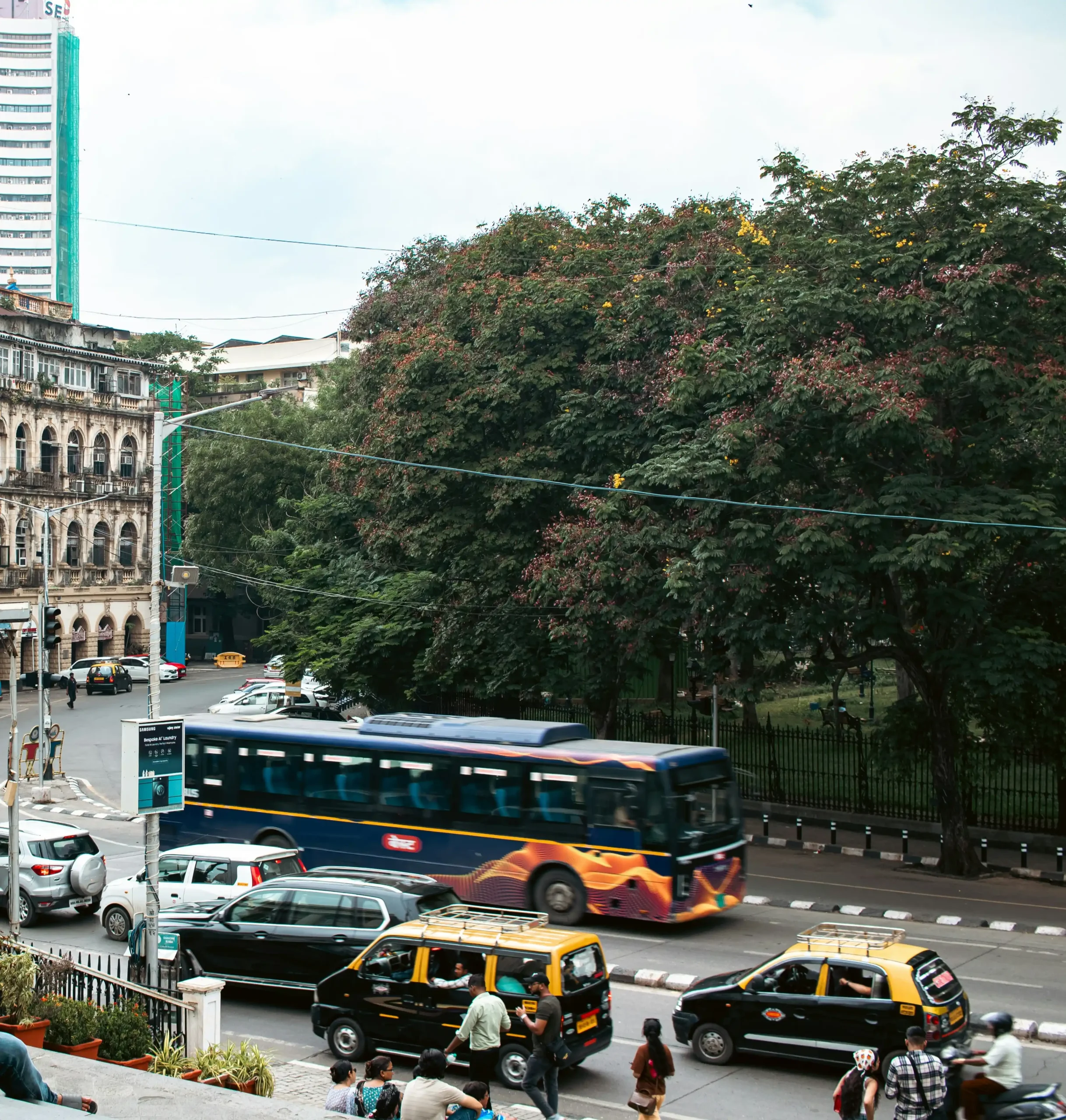
Horniman Circle today, once a chaotic cotton trading pit
In the early 1800s, this open ground was where cotton and opium changed hands. Merchants gathered here to bid, negotiate, and speculate. When the American Civil War broke out in 1861, cutting off cotton supplies from the Confederate states to Britain, Bombay's cotton prices exploded overnight.
The wealth generated in this very spot funded the demolition of the old Fort walls and the construction of Mumbai's first planned business district. The fortunes made here quite literally built modern Mumbai.
James Douglas documented this transformation in his 1893 book Bombay And Western India. The Bombay Hurricane of 1837 had submerged this Green in waist-deep water just decades earlier. By the 1860s, it was the financial heart of the city.
Today, office workers eat sandwiches where cotton traders once shouted bids. The trees have grown tall. The chaos is gone. But if you know what happened here, the peace feels different.
4. Flora Fountain Was Almost Named After Someone Else
Flora Fountain is Mumbai's Piccadilly Circus, the point where five major roads converge in the heart of Fort. Named after the Roman goddess of flowers and spring, the ornate 1864 fountain depicts Flora standing atop tiers of sculpted mythological figures, water cascading around them.
But here's what most people don't know: Flora Fountain was never supposed to be called Flora Fountain.
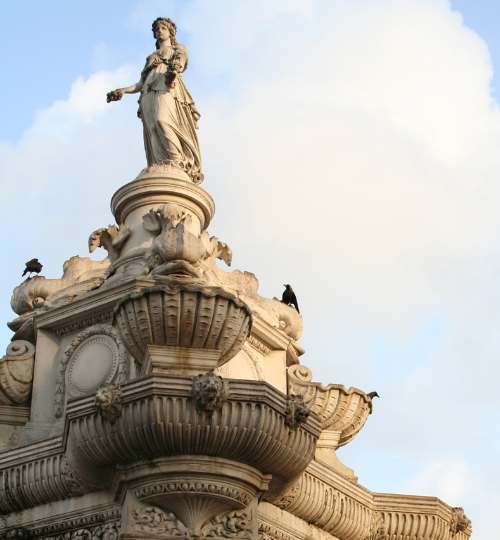
Flora Fountain, almost had a completely different name
The original plan was to name it Frere Fountain, after Sir Bartle Frere, the Governor of Bombay who ordered the demolition of the old Fort walls and reshaped the city into its modern form. Frere was responsible for many of Mumbai's most iconic public buildings and infrastructure projects. The fountain was built to honour him.
Someone changed the name before the unveiling. Historical records don't clearly explain why. The goddess Flora replaced the governor, and Frere's contribution to Mumbai became a footnote that most visitors never learn.
The fountain stands exactly where the original Church Gate of Bombay Fort once stood, the same gate that gave Churchgate station its name. When the Fort walls came down in 1860, the British placed the new fountain at this historically significant junction.
In 1960, the square was renamed Hutatma Chowk (Martyrs' Square) after 106 protesters were killed during demonstrations for a separate Maharashtra state. A memorial stands next to the fountain today. Two histories, two names, one junction, and most visitors just take selfies and move on.
5. The Fort That Gave Fort Mumbai Its Name No Longer Exists
Here's the most ironic secret of all: there is no fort in Fort Mumbai.
The area takes its name from Fort George, a fortified settlement the British East India Company built between 1686 and 1743. The fort had walls, cannons, three gates (Bazaar Gate, Church Gate, Apollo Gate), and strict rules, no one was allowed inside after sunset, and guns were fired daily to mark the time.

The Fort streets today, no walls, only names remain
Deputy British Viceroy Humphrey Cooke built the first 50-metre wall with 20 cannons in 1665, right after Bombay was transferred to the British as part of a royal dowry. Governor Charles Boone expanded it between 1715 and 1722.
For nearly 200 years, this fort defined the boundaries of Bombay. Everything important, the cathedral, the trading grounds, the administrative buildings, existed within its walls.
Then Sir Bartle Frere demolished it.
The walls came down in the 1860s as part of Frere's urban improvement project. The city had outgrown its fortifications. The gates were dismantled. The cannons were removed. The stone was repurposed.
Today, nothing remains of the original fort except place names. Churchgate. Apollo Bunder. The Fort area itself. You walk through what was once a walled settlement, but without knowing the history, you'd never guess anything was ever there.
The fort is gone. Its name is all that survives.
What These Secrets Have in Common
None of these facts are hidden behind locked doors. St. Thomas Cathedral is open to visitors. The Asiatic Society accepts members. Horniman Circle is a public garden. Flora Fountain sits at a busy intersection. The story of the fort is written in the very names of the streets.
The difference between a tourist and a traveller in Fort Mumbai isn't access, it's attention.
Most heritage walks in Mumbai will show you the buildings. Some will tell you when they were constructed and who designed them. But the details that bring Fort alive, the rejected offer, the renamed fountain, the Zero Point plaque, the trading pit that became a garden, these require more than a walking tour. They require someone who knows where to look.
Fort Mumbai rewards the curious. The question is whether you'll walk through it, or actually see it.
Some Stories Are Better Walked Than Read
Discover what we didn't tell you, the lanes, the recipes, the secrets that don't fit in a blog.
Explore Fort Untold